Ask yourself,
why do you believe what you believe?
When you claim something from the Bible is true are you doing so because of evidence and honest reasons or simply because you want it to be true? If the evidence your claim is based upon ends up being proven false would you stop making the claim? If your claim is based only on wishful thinking then you are being dishonest with yourself. There is a difference between hoping that something is true and claiming that it is true.
Faith
When no evidence can be presented many resort to faith. If faith is your reason for saying something is true then ask yourself why? Claiming that something is true because of faith is in fact the same as claiming that something is true because you want it to be true. Faith is not a reason to believe in something, it is the lack of reason to believe in something. Faith is simply an excuse to avoid giving a reason.
Two Types Of Faith
There are two types of faith, trusting faith and blind faith. Trusting faith is a predicted trust based on evidence. Blind faith is the belief in something despite the evidence. Neither forms of faith are reasons to believe in something. Only the evidence which trust is based on or which blind faith disregards serves as an honest reason to base believe on.
Below are more questions that one should be asking themselves
when discussing the validity of claims made by Christianity.
a
Do you welcome criticism & knowledge?
Most importantly you need to welcome criticism. Christians all too commonly view it as a personal attack when a non-Christians shares knowledge and evidence for previously unknown fallibilities within the text or history of the Bible. If one really had any faith in their claims or cared about what is true then shouldn't they welcome criticism and new knowledge? Christianity needs to be treated with equal honestly, especially by its followers. When a math teacher corrects a student that student doesn't accuse the teacher of attacking him or tells the teacher, "hey you have your beliefs and I have mine." Why should the topic of Christianity's claims be any different?
Remember: it is the claims, not the beliefs, of Christianity that are in question.
b
What if there was no reward/threat?
What if God did exist but there was no reward of Heaven and no threat of Hell would you still praise and worship the Christian God? Do you honestly worship and praise God because of who he is or simply out of personal greed and fear? What if there was not even eternal life and the life we are living is the only one we have?
c
Could you be happy in Heaven?
If Heaven and Hell did exist could you honestly be happy up in Heaven knowing that people are suffering below in Hell for eternity? One could argue that God would simply remove all knowledge and memory of those people and of Hell once you are safely in Heaven but would you still be you without the knowledge and memories that define you?
d
Do good people deserve Hell?
Do you honestly think that all good people who are not Christians not only will go to Hell but also deserve to go to Hell? Do you honestly think that homosexuals, most of academia, and Gandhi deserve the same fate as child rapists and murders? Almost all people who do not "accept Jesus Christ as their personal savior" do not reject him or choose not to accept him. They simply have not found convincing evidence for his legitimacy or they have found evidence for the contrary. Thus they do not even have the option to accept Jesus since they have not been provided convincing reasons to even believe in him. Do they all deserve to go to Hell based on what evidence, or the lack of, was presented to them?
e
Are you following someone's word?
Man is not all-knowing and because of this some Christians choose "God's word" over man's, after all God is said to be all-knowing. However it was non-all-knowing man who said that God was all-knowing and it is man's word that scripture is "God's word." It was man who claimed they were chosen by God and that their stories were the inspired word of God. And it was man who said that the word of those self proclaimed prophets is true. As everyone admits, man can be mistaken. That is why we should not rely on anyone's word for a basis of truth but rather the evidence that does or does not back up their words.
f
What about Mythological creatures?
Do you honestly believe in the existence of all the mythological creatures in the Bible? The Bible claims that witches, satyrs/fauns, talking animals, cherubim, dragons, unicorns, and serpents hatched from a cock's egg having the power to kill by its glance all really exist. Do you honestly believe in the existence of any of these mythological creatures?
Dragons
Dragons have made it into the stories and mythology of various cultures and have even made their way in the Bible. Dragons are claimed to actually exist at least 25 times according to scripture and most versions of the Bible such as the KJV.

Some versions of the Bible (e.g. NIV) dishonestly replaced every use the Hebrew word 'tanniyn' (dragon) with whatever sounded more believable in each verse. The NIV has translated the word to 'serpent', 'jackal', 'monster', and 'sea monster' (Deut 32:22, Neh 2:13, Psa 74:13, Psa 148:7).
In Jeremiah 14:6 the NIV even changed the words found before the word dragon so the verse would relate to jackals instead of dragons. The words "snuffed up the wind like dragons" were changed to "pant like jackals" since "snuffed up wind like jackals" wouldn't make sense.
Witches
The Bible obviously claims that witches are actually real since it has God laying down a law telling us to kill them.
Exodus 22:18 "Thou shalt not suffer a witch to live"
Cockatrice
A cockatrice is a mythological creature that's a serpent hatched from a cock's egg with the power to kill people by its glance. When God, in Jeremiah 8:17, is talking about the cockatrice he says, "I will send serpents, cockatrices, among you, which will not be charmed." Not only does the Bible claim such creatures really exist but also that the legend of you normally using magical charm spells to protect yourself from the cockatrices is true.
Satyrs/Fauns
Satyrs (or 'fauns' in Italian) are mythological creatures that are half-human and half-goat. They are typically the companions of Dionysus the god wine and spend their time drinking, dancing, and chasing nymphs. These mythological creatures are said to actually exist in Isaiah 13:21 & 34:14.
13:21 "...and satyrs shall dance there."
34:14 "...and the satyr shall cry to his fellow..."
Cherubim
In modern times we picture a Cherub as a chubby baby angel but when the Bible mentions Cherub or Cherubim it is referring to a mythological winged guarding such as the Shedu from ancient Mesopotamian culture [pictured here]. The Hebrew word for cherub means "divine messenger" which translated to Greek is "angelos." This is why Cherubim are commonly and falsely depicted as angels. Cherubim are referred to 69 times in the KJV Bible.
Unicorns
Today pretty much everyone thinks of mythology and fantasy once the name 'unicorn' is mentioned but long before the Bible was written and even quite some time after man thought they were actually real creatures. If you honestly believe that the Bible is true then just like ancient man you too must believe that unicorns actually exist since they are claimed to be real in Job 39:9-10, Deuteronomy 33:17, Numbers 23:22 & 24:8, Psalm 22:21, 29:6 & 92:10, and Isaiah 34:7.
Modern Bibles like the NIV swapped out 'unicorns' with 'oxen' to make the Bible more believable in these modern times even though Hebrew scriptures clearly do not say 'oxen' in these verses. Simply take a look at the book of Isaiah. When talking about oxen in 30:24 the Hebrew scriptures use the word for oxen which is 'eleph.' When talking about unicorns the scriptures say 'rĕ'em.' The NIV dishonestly translates both words to oxen.
Some use the excuse that scriptures can't really mean unicorn since unicorns are delicate and weak creatures yet scriptures say the animal is strong. The way unicorns are portrayed nowadays is not how they were portrayed back then. Unicorns were originally believed to be strong and fierce, hence why they were depicted on shields and battle flags, with a billy-goat beard, a lion's tail, and cloven hooves.
Others use the excuse that scriptures can't really be talking about a one horned creature since most the verses say horns instead of horn. However if you read the Bible every time the word horn is pluralized in the above verses so is the creature being mentioned and when talking about a single creature it mentions a single horn. For example, Psalm 92:10 says "like the horn of an unicorn." Keeping true to its dishonest methods the NIV removed reference to a single horn and simply put "like that of a wild ox" instead of "like the horn of an unicorn" because not making the additional alterations would have left the NIV with a one horned oxen.
Lilith
Lilith is only referred to once in scripture. Some translations of Isaiah 34:14 call her by name but most refer to her as "the screech owl" or night demon but still points out there is only one of this creature and that it's female. According to Jewish folklore Lilith was Adam's original wife but since she wanted equality with men God cursed her, making her into an owl night demon, and banned her from Eden. Obviously though those who eventually wrote the scriptures did not include this part.
Talking Animals
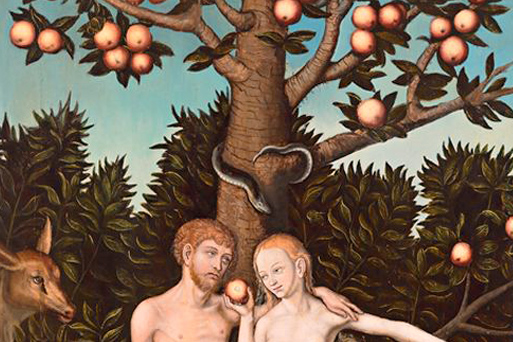
Talking animals are a common feature of mythology and the Bible has two of its own. In Genesis there is the talking snake and in Numbers 22:21-39 there is Balaam's talking donkey. Some will say that Satan and God were talking through the animals but that alone is still a mythological act on its own which also doesn't occur in real life.
close
5:2